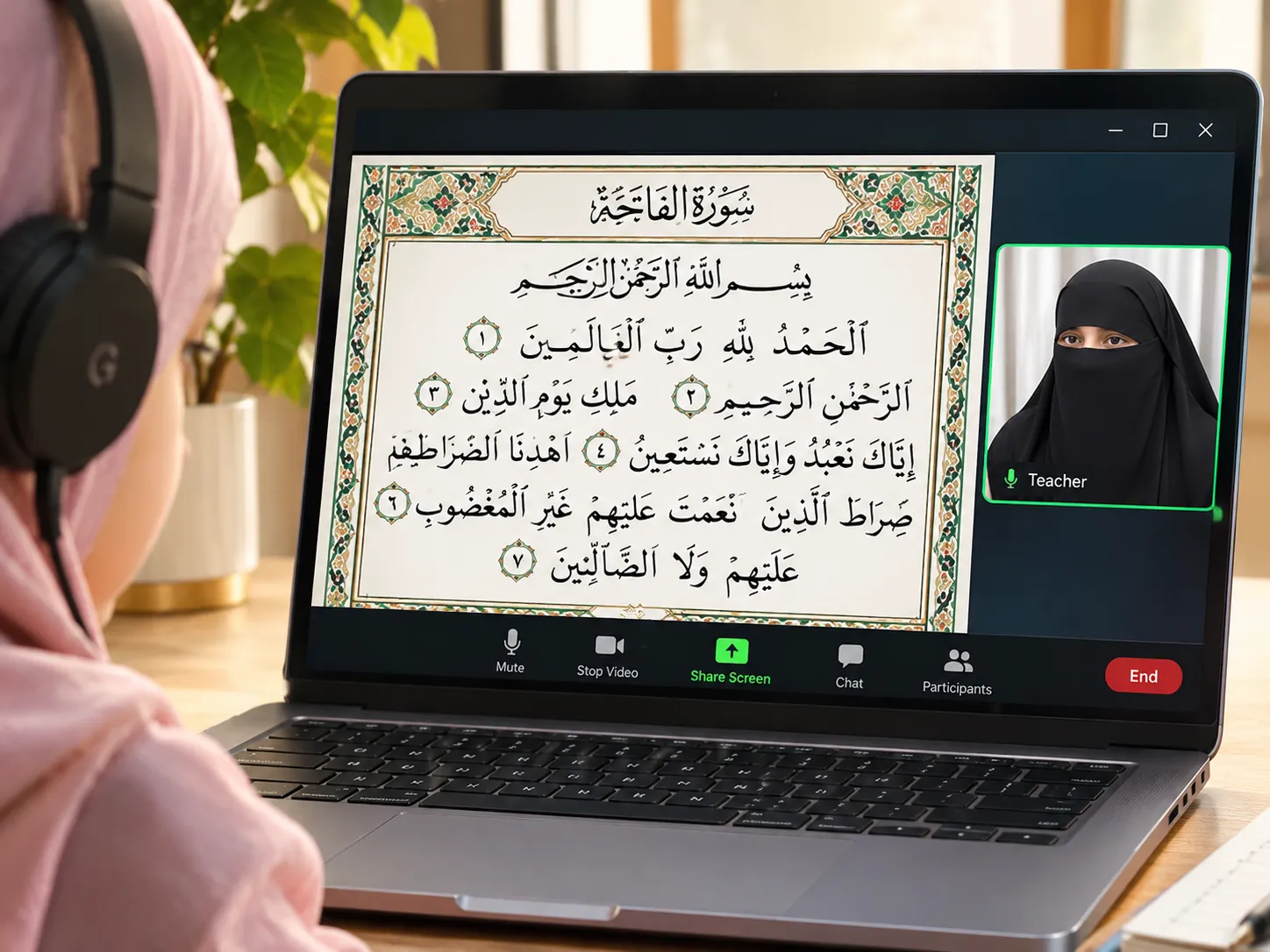
Want to learn the Quran as an adult? Discover beginner-friendly Quran classes, Noorani Qaida, Tajweed and practical tips for starting online.
Is It Too Late to Start Learning the Quran as an Adult?
It is not too late to begin learning Quran reading as an adult. Some learners are starting with Arabic letters for the first time; others are returning to lessons after years away, or can read but want to improve pronunciation. Previous experience is not a requirement for a beginner.
It is understandable to feel unsure about starting with the basics, especially if you think you should already know them. Every learner has a different starting point, and a suitable teacher can help you identify what to work on without judgement. Progress varies with your goals, practice, and learning needs, so focus on steady steps rather than a fixed timetable.
Why Do Adults Choose Online Quran Classes?
Online Quran classes for adults make it possible to learn from home, which can be practical for people balancing work, family, and other responsibilities. Depending on the provider’s schedule, online lessons may offer time options that fit different routines and time zones. If you are comparing providers, our guide on choosing an online Quran academy covers questions to ask about teachers, courses, and class arrangements.
In a one-to-one lesson, the teacher can listen to your recitation, respond to questions, and adapt practice to your current ability. Some adult learners also value a private setting where they can take their time with unfamiliar letters or ask for a correction to be explained again. These are potential benefits, not a guarantee that online study suits everyone; the right choice depends on your learning preferences and the class arrangement.
How to Start Learning the Quran as an Adult
A useful first step is to understand what you can already read and what you want to improve. From there, you and your teacher can choose a suitable course and build a manageable learning plan.
Step 1: Understand Your Current Learning Level
Think about which description best fits your current reading. You do not need to test yourself perfectly; the goal is to help a teacher understand where to begin.
- Complete beginner: you are not yet able to recognise Arabic letters.
- Early reader: you recognise letters but find it difficult to join them or read fluently.
- Developing reader: you can read Quranic text but want support with pronunciation or recurring mistakes.
- Experienced reader: you read already and want to study Tajweed or refine your recitation.
Step 2: Start with Noorani Qaida if You Are a Beginner
If you are new to Arabic reading, Noorani Qaida can provide a structured introduction to Arabic letters and their sounds, connected letter forms, basic vowel marks, and other reading signs. These foundations prepare learners to read words and begin Quran reading with guidance. For a closer look at the topics commonly introduced, see our guide to what Noorani Qaida teaches.
You do not necessarily need to start at the first lesson if you already have foundational skills. Tell your teacher what you can recognise or read so they can identify which concepts need practice and which you can move beyond.
Step 3: Develop Your Quran Reading Skills
Once you have the necessary foundations, you can practise applying them to Quranic words and verses. In Quran reading and recitation lessons, a teacher can guide your reading, help you work through unfamiliar combinations, and point out mistakes to revisit. Our beginner’s guide to learning Quran online explains the broader progression from foundations to recitation.
Fluency grows through careful, repeated practice; it is not necessary to rush. Reading manageable passages and reviewing corrections can help you become more comfortable while keeping accuracy in view.
Step 4: Improve Your Pronunciation
Some Arabic sounds may not exist in a learner’s first language. Makharij (points of articulation) describes where a letter’s sound is formed in the mouth or throat. Listening to a clear example and practising it with a teacher can help you notice how one letter differs from another.
Ask your teacher to demonstrate a difficult sound, then practise it in a letter, word, or short passage. Feedback can help you identify pronunciation habits that are difficult to hear on your own and decide what to practise next.
Step 5: Learn Tajweed Gradually
Tajweed is the study and practice of rules that guide Quran recitation. Adults can learn foundational rules and apply them in reading with a teacher’s explanation and feedback.
You do not have to take on advanced terminology all at once. The relevant starting point depends on your reading ability and learning goals. Ask your teacher which rule to focus on, listen to examples, and practise applying it in context.
Step 6: Practise and Revise Consistently
Regular revision helps you return to letters, words, and corrections from earlier lessons. Repeat difficult words, practise pronunciation aloud, and keep a note of anything you want to ask your teacher. A realistic routine you can maintain is generally more helpful than an ambitious plan that leaves you feeling behind.
If you are struggling with a particular sound or concept, let your teacher know. They can explain it another way or help you set a smaller practice goal. Be patient with the process and measure progress against your own starting point.
Which Quran Course Is Right for Adults?
The appropriate course depends on what you already know and what you hope to learn. You may focus on one area at a time; it is not necessary for every learner to take every course.
Noorani Qaida
For adults beginning with Arabic letters or rebuilding foundational reading skills, Noorani Qaida lessons introduce letters, pronunciation, connections, and basic reading signs.
Quran Reading and Recitation
For learners who want to develop reading ability, practise Quranic text, or build fluency with guidance, explore Quran Recitation.
Tajweed
For readers who want to understand and apply recitation rules, consider Quran Reading with Tajweed at a level appropriate to their current reading.
Quran Memorization (Hifz)
Adults interested in memorizing selected portions or working toward broader memorization goals can explore Quran Memorization (Hifz) and discuss a suitable approach with a teacher.
Quran Tafseer
For learners interested in studying explanations and meanings of Quranic verses, see the Quran Tafseer course.
Islamic Studies
For broader Islamic knowledge and education, explore Islamic Studies.
If you are unsure where to begin, describe your experience and objectives to a teacher and ask which course fits your current level.
Why One-to-One Quran Classes Can Be Helpful for Adults
Personalized one-to-one lessons allow the teacher to focus on your questions, reading level, and learning goals. You can ask for clarification, spend more time on a difficult sound, and receive feedback directly while you read. This can be particularly useful when you want to address a specific challenge or prefer learning at an individual pace.
Group classes may suit adults who enjoy learning with others and sharing discussion or practice. When comparing formats, consider how much individual feedback you want, how comfortable you feel speaking up, and what the class includes. One format is not automatically right for every learner.
How to Balance Quran Learning with Work and Family Responsibilities
Choose a lesson time that is realistic for your existing routine, and discuss your availability with the teacher before you begin. A regular slot may help you build a habit, but schedules and rescheduling arrangements vary, so clarify them with the academy.
Keep between-lesson revision manageable. A short review of a recent lesson or a few careful repetitions can fit into a busy day more easily than a large task. If you have children learning as well, coordinate family routines where practical; our guide to online Quran classes for kids offers ideas for supporting a child’s learning at home.
If work or family commitments change, let your teacher know and agree on a realistic way to continue.
Common Challenges Adults Face When Learning the Quran
Challenges are a normal part of learning a new reading system. Identifying what feels difficult can help you and your teacher decide on a useful next step.
Lack of Confidence
Set a small, specific goal for each lesson, such as practising a few letters or reviewing one reading sign. Supportive feedback and visible progress in manageable skills can help you feel more at ease.
Difficulty Recognizing Arabic Letters
Return to letter recognition and connected forms when they feel uncertain. Revisiting foundations is a practical way to strengthen reading, not a reason to feel behind.
Pronunciation Challenges
Listen carefully to your teacher’s demonstration, repeat the sound, and ask for feedback. Some distinctions take repeated practice, especially when they are unfamiliar in your first language.
Limited Time
Discuss your availability before setting a routine. Keep revision achievable and choose a lesson schedule that works with work and family commitments rather than adding unnecessary pressure.
Inconsistent Practice
Link practice to a regular time or existing routine and keep the task small enough to repeat. If you miss a session, resume with a short review rather than trying to make up everything at once.
Fear of Making Mistakes
Mistakes show what needs attention. Read at a comfortable pace, accept corrections as part of practice, and ask your teacher to explain anything that remains unclear.
How Long Does It Take an Adult to Learn the Quran?
There is no fixed timeline for learning Quran reading or developing Tajweed. Progress depends on your previous Arabic knowledge, current reading ability, learning objectives, lesson frequency, practice and revision, individual learning needs, and teacher guidance.
Building basic reading skills is different from developing more advanced recitation. A teacher can help you set a starting goal and review it as you learn; avoid comparing your pace with someone whose experience or schedule is different.
Frequently Asked Questions
Learning can begin at any stage
Start Your Quran Learning Journey at Any Age
Dirasat-ul-Quran Online Academy offers personalized one-to-one online Quran classes for adults at different learning levels. Explore the available courses and discuss a suitable starting point for your goals. You can also experience the teaching approach through 3 Days of Free Demo Classes before deciding whether to enrol.
Book 3 Days of Free Demo Classes